
There is a variety of Forex market news sites that include currency news, market news, Forex calendar events and other Forex news. You need to learn how to stay in touch at all times.
Apart from that, there are plenty of other useful resources such as the Forex market calendar, various apps and other resources that we will elaborate on in due time.
Forex & Currency News
As far as Forex market news go, a huge portion goes to reports on currencies and major events that will ultimately affect the prices of currency pairs. Some Forex traders rely almost exclusively on news reports for the decision-making process. The truth is that the professionals have factored in every possible outcome long before the event even took place. Still, staying appraised of current developments is highly advised, at least in relation to your favorite currencies.
A good read: How Does Currency Work?
Of course, most news articles on this subject will concern major currencies and economies. U.S. dollar, Chinese Yuan, Japanese Yen, British Pound and the Euro are going to comprise most of the topics for these articles. The other currencies come in from time to time, but the interest in them is much lower and there are fewer major developments to report about.
U.S. dollar
The good old $ is essentially the most traded currency that Forex has to offer. It comprises the bulk of the monetary mass at play, paired up with other currencies. This should come as no surprise, as even in the old days, the U.S. currency was used as an intermediary on this market.

Back when banks and corporations were the only ones allowed and used Forex for purely practical purpose, U.S. dollar was used as an intermediary. Any other currency had to be converted to dollar and then dollars had to be converted into the desired currency. Nowadays this process has been simplified and there are plenty of currency pairs with or without the “USD” part in them.
Even traders who try to avoid dealing with U.S. currency are usually forced to read Forex market news reports on U.S. economy. Still, there is no shortage of CPI updates, FED speeches as well as FOMC minutes and other events pertaining to the value of the U.S. dollar. The same goes for prognosis and future forecasts of market performance, such as the ones from these links below.
Be sure to check out: Federal Reserve & DailyFX
Euro
The official currency of 19 EU member states and several outside the Euro Zone. The Euro (EUR) does not lag behind the U.S. dollar in terms of frequency. In fact, the EUR/USD pair is arguably the bread and butter of Forex trading.
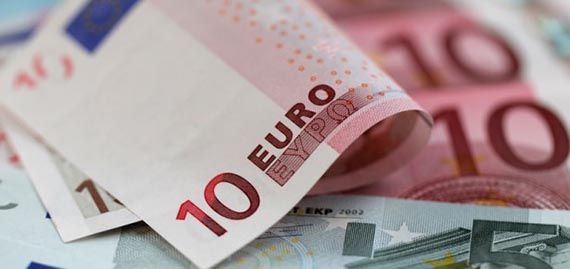
This is the most popular currency pair in the world. Naturally, there are plenty of things to look out. Major events include G8 and G20 summits, as well as major reports regarding the economy of any EU member state. Look out for ECB (the European Central Bank) announcements and related articles.
Link: ECB
Pound Sterling
The Pound Sterling or the British Pound (GBP) has seen some abysmal performance ever since Brexit became a grim reality. But overall it was considered one of the world’s strongest and one of the most stable currencies there are.
A good read: Brexit Effect on Pound
It will undoubtedly return most if not all of its former glory. When it does, it will have something to do with major news regarding the economy of the UK, as well as reports from the Bank of England (BOE) and analysis of their policies.
Link: Bank of England
Chinese Yuan
Chinese Yuan (CNY) seems to be gaining in popularity as China’s importance on the world stage grows. While not a ‘major’ currency in a traditional sense, its importance is no less significant because of it.
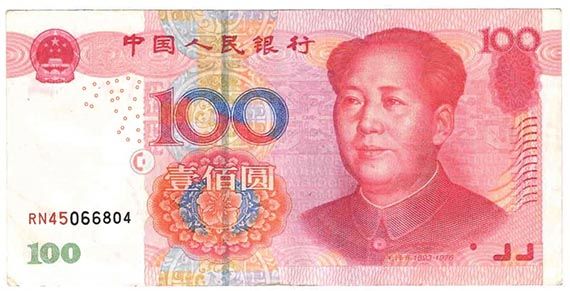
The Yuan used to be pegged to the U.S. dollar. But even since it ‘broke free’ there has been a looming currency war in the making. If it does happen eventually, a shrewd Forex trader would most likely deduce it ahead of time based on reports from the Central Bank of China.
Links: Bank of China & DailyFX
Japanese Yen
Another Asian currency on this short list is the Japanese Yen (JPY). If the U.S. dollar is the most traded currency on Forex markets and the Euro is a distant second, then the yen is definitely entrenched at the third position.
A good read: The Bladerunner Trade Strategy
The fact that many countries use it says something. The Bank of Japan is considered the authority on this matter. Any Forex trader dealing with pairs involving the Japanese currency should keep an eye on news and rumors from this source. Other than that, GDP reports and major developments pertaining to Japanese economy are a good hint as to where their economy is going.
Links: Bank of Japan & DailyFX
Economy/Market News
Main economic indicators are also an important factor. Any news that impact the perception of economic performance of a particular country can and will affect the value of its currency.
GDP, Central Banks, Unemployment rates…
Gross domestic product is one of the leading indicators that Forex traders turn to in order to appraise the situation and base their currency speculations on. The International Monetary Fund is among the most trusted sources on GDP for individual countries.
- International Monetary Fund
- Unemployment rates and other factors
Forex Economic Calendar
The whole purpose of the Forex economic calendar is to list all the major events that may or may not be important enough for the Forex market news. In fact, it would behoove any Forex trader to have an abroad plan of their trades, preferably in advance.
This calendar enables them to exploit or avoid various scheduled events that may have a profound effect on their market strategy. For some traders, especially ones whose strategy is based on high volatility, predicting the outcome of these events represents a golden opportunity.

Traders with stable trading strategies that do not respond well to sudden and unforeseen price movements tend to schedule their trading habits around these events. So that the only thing they need to worry about are the unforeseen events.
Other resources
Apart from Forex market news, there are all sorts of resources and apps. The apps themselves can be easily downloaded from various app stores, mostly App store for iPhones and Google Play for Androids.
Not all of them are the same and there are some recommendations. We are not talking about apps from brokers that allow clients to trade via their Smartphones and iPhones. This is about apps that can help you keep track of news, enhancing your productivity and effectiveness as a trader.
For instance, MetaTrader and Trade Interceptor are among the most widely used for their ability to deliver accurate and latest quotes to their users. They even allow them to place orders online. MetaTrader is better when it comes to technical indicators, but Trade Interceptor has better features, including better training and practice methods.
Apps such as NetDania Forex, Trade Optimizer, and Swiss Forex are among the most useful for any type of analysis. The first one allows you to stay appraised of news sources and market indexes for free. The charting options are also amazing.
The Trade Optimizer is slightly better and features a currency calculator. But unlike the other two, this one is not free. It is the most accurate one, but it comes with a price. Finally, the Swiss Forex specializes in fundamental and technical analysis and is completely free of charge. It also features many Forex-related commentaries, charts and event calendars.

 No matter how good an divergence indicator, a pattern or any trading tool is, don’t use it by itself and try to confirm your signals with some other type of analysis. You can do this by using confluence. Confluence forms in a spot where you have more than one indication of where price will go. For example, confluence occurs where price reaches a confirmed horizontal level of support or resistance and a confirmed trend line. This is a two point confluence. If in that point, you see divergence forming, confirming your direction, you will have a stronger signal and a higher probability of price going your way. Here is an example:
 First and foremost, do not be misled by the fact that support and resistance come in various forms; this subject matter is actually a lot simpler than it may seem at a first glance. For example, any experienced trader has realized that certain assets can only be pushed so far in a single direction, regardless of how hard they try to influence their price. If the price of an asset has some serious difficulties climbing past a certain point, and cannot seem to achieve this, then this may in fact be its resistance level. Or, if it cannot seem to fall below a certain price, we are talking about a support level. When analyzing charts, support and resistance levels are often referred to as a floor or a ceiling respectively, mostly because this is as far as prices will go. Also, do not take these things for granted, as support and resistance are not set in stone and will get breached – eventually. Rather, the support and resistance level of a certain asset can be moved in accordance with market conditions.
 These barriers can and do change with time, and what directs those changes are general trends. This is why trends and trendlines are just as important as support and resistance, especially for rookies who have yet to get their bearing in the industry. As markets trend upwards, resistance levels become stronger as traders slow down, expecting the price to fall down towards previously established borders. This “plateau” effect can be discussed further at another time, but it involves prices standing relatively still or even dropping slightly, before a new resistance level is established, as the market stabilizes yet again. Needless to say, support levels work in the exact same manner, except the price in this process goes down, rather than up. As the actual price gets closer to the perceived support level, the trading gears up toward short positions, expecting the prices to recover in the near future. When applied to a chart, the line that signifies the price will peak either at the upside or a downside; connecting these peaks is how a trendline is formed, and it is used as a general indicator as to whether the price is expected to rise or fall. However, in spite of their objectivity and accuracy, the fact that the use of trendlines is so widespread these days can often lead to problems of its own, as people start relying on these things too much and leave their positions vulnerable to traders who can think outside the box.
 First one we already mentioned – the experience. Managed forex accounts come with brokers who have proven long-term trading involvement. The second thing to consider is pressure. Make no mistake, trading can be both frustrating and exhausting. Letting your emotions take over is a safe way to the abyss. You don’t want to do that. Instead, it’s better to rely on managed forex accounts and traders who make rational decisions when pressure comes into the game. Finally, ask yourself the following questions – Do you really want to become a trader? Are you willing to reshuffle your time and transfer a significant part of it to build your trading mindset. Will you stay commited to it? If motivation as well as clear objectives lack, forget it. Managed forex accounts are the way to go.


 Now, think about how many trades could be entered by a trader that uses the 1 and 5 minute chart and just aims for 3-5 pips profit and exits his trades in less than 5 minutes. The amount of trades can be huge during the course of one day. This fast paced way of trading is called “Forex Scalping” and it can bring a lot of profit, but also it requires a lot of concentration and constant monitoring of the trade. Profits come from the amount of successful trades, even if the profit from one or two trades is insignificant and that’s why a trader must be constantly in front of his computer.